e u r o p e

| home |

| africa | america | asia | east asia | EUROPE | oceania | south east asia |

| commemorative | hybrid | polymer | australia |

| a | b | c | d | e | f | g | h | i | j | k | l | m | n | o | p | q | r | s | t | u | v | w | x | y | z |


"no borrowed scans here nor i cut and pasted from other web sites. all notes displayed here are mine. i have 100% ownership of all the banknotes posted here!"

Showing posts with label Great Britain. Show all posts

...Great Britain - King Charles lll Polymer Series Full Set Released 05.06.2024 Chief Cashier Sarah John

 Great Britain
(England, Scotland & Wales)
 
Bank of England
Currency : Pound Sterling (GBP)
 
Here is a full set of four notes all released on 05.06.2024. Unlike the first polymer series, all these four notes were made available to the public on the same day. It has been a long time since the Bank of England has issued banknotes in full sets.

King Charles III became the King of the United Kingdom following the death of Queen Elizabeth II on 08.09.2022. Coronation was held on 06.05.2023. The last series of polymer notes with the portrait of Queen Elizabeth II were released between 2016 to 2021. I suppose the release of this series in full set is to honour the new monarch. If not, the Bank of England would just print new banknotes with the image of King Charles III as and when current stocks of banknotes are depleting. 
 
Since the introduction of the polymer series in 2016, this is the first reprint for the ₤5, third reprint for the ₤10, and the first reprints for both the ₤20 and ₤50 notes.
 
Apart from the new portrait of King Charles III, there are no changes to the main features or theme for this polymer series.
 
Five Pounds
King Charles III
 
Front - King Charles III (b.1948), a see-through window with Elizabeth Tower (Big Ben), Britannia;
 
Signature - Sarah John (Chief Cashier since 2018)
Watermark - Portrait of King Charles III on the see-through window
Dimensions - 126mm x 65.5mm
 
Back - Sir Winston Churchill 1874-1965, Palace of Westminster and Elizabeth Tower (Big Ben), 1993 Nobel Prize in Literature award medal, Blenheim Palace maze (Blenheim Palace - birthplace and ancestral home of Sir Winston Churchill);
 
Sir Winston Churchill 1874-1965

Ten pounds
King Charles III

Signature - Sarah John (Chief Cashier since 2018)
Watermark - Portrait of King Charles III on the see-through window
Dimensions - 133mm x 70mm

Back - Image of Jane Austen (b.1775 - 1817). Jane Austen, a novelist, was born in Steventon (Hampshire), south of England.  She is known as one of the most famous writers in English literature and she has only written 6 full-length novels. Her novels were made into TV series, films, theater plays and radio adaptations. She died at a very young age of 41.
 
Jane Austen (b.1775 - 1817)
 
Twenty Pounds
King Charles III

Signature - Sarah John (Chief Cashier since 2018)
Watermark - Portrait of King Charles III on the see-through window
Dimensions - 140mm x 73.5mm
 
Back - An image of Joseph Mallord William Turner (b.1775-1851) with a backdrop of one of his famous paintings, the Fighting Temeraire. This oil painting was completed in 1838. The portrait William Turner printed on this note came from a self-portrait oil painting completed in around 1799. William Turner was a romantic painter, printmaker and watercolourist. He was born and lived in London all his life.
 
Joseph Mallord William Turner (b.1775-1851)
 
Fifty Pounds
King Charles III

Signature - Sarah John (Chief Cashier since 2018)
Watermark - Portrait of King Charles III on the see-through window
Dimensions - 147mm x 78mm
 
Back - The main design of this note on the back features Alan Mathison Turing (b.1912-1954). Alan Turing was a brilliant mathematician, computer scientist and a code breaker too. If you have seen the movie called 'The Imitation Game' then you know who I am referring to. Alan Turing was born on 21.06.1912. This note pays tribute to Alan Turing for breaking the Nazi Germany Enigma machine encryption code during the Second World War. The Enigma was a machine used by the Nazi to send secret messages securely and to make it even more difficult to crack, the German changed the cipher system daily. During the first few years of the war, Germany's U-boats (Wolfpack - a convoy of submarines) were very successful in sinking Allied ships in the Atlantic ocean, the Indian ocean and the Pacific ocean thus affecting Britain's war supplies from the United States and other countries in fighting the Nazi. The British government then formed a cryptography team that initially included Alan Turing to study and find a way to break the Enigma code. Alan Turing was not happy with some of the team members in the initial process, and he wrote to the then Prime Minister Winston Churchill, who then put Alan Turing in charge of the project. In July 1942, he successfully cracked the code which enabled the British to listen to the messages sent by the Germans, thus giving the British an advantage in the open seas. Alan Turing was awarded an OBE in 1945 for his wartime contribution. However, he was prosecuted in the early 1950s for being a homosexual as it was illegal then. He was arrested and found guilty of gross indecency and instead of going to prison, he accepted chemical castration as his punishment. On 07.06.1954 at the age of 41, he was found dead at his home. The official caused of death was suicide by cyanide poisoning. As not many people, even in the Great Britain would have heard of Alan Turing until the movie 'The Imitation Game' made in 2014, I guess this note is to celebrate Alan Turing's achievement during the last world war and perhaps (maybe) an apology to him for prosecuting him for who he was. In 1967, the British parliament passed the law to decriminalise homosexual activities in the United Kingdom.
 
Whilst Alan Turing was credited with the breaking of the German Enigma code, it should be noted that it was the Polish mathematicians who worked out how to read the Enigma messages first and then shared the information with the British government.
 
Alan Mathison Turing (b.1912-1954)

...Great Britain - Polymer Series With Signature Of Sarah John

Great Britain
(England, Scotland & Wales)
 
Bank of England
Currency : Pound Sterling (GBP)
 
Update: On the 3rd of September 2020, I posted the new Great Britain £20 polymer note. Here, I have uploaded two more notes of £10 and £50 polymer notes all bearing the signature of Sarah John.
 
Below is a £10 note issued with the signature of Sarah John. This £10 note is a reprint from the 2017 first issue. I have also now updated this note as per below. There is no chance in design for the £10 polymer note except it's printed with a new signature.

Signature - Sarah John (appointed since 2018)
Dimensions - 132mm x 69mm
 
Ten Pounds
Dated 2016Ⓒ, Queen Elizabeth The Second
Jane Austen (b.1775-1817)


Twenty Pounds
 
Posted here is the latest £20 note issued with the Chief Cashier's signature of Sarah John. Sarah John was appointed to the role on 01.06.2018. The £20 note is a new issue which was released to the public on 20.02.2020. This is the third of the polymer series since 2016 replacing the current paper banknotes in circulation.
 
As for the £20 note, and as expected, the main feature of the note on the front is the portrait of her majesty, Queen Elizabeth the Second together with the Bank of England building. On the larger transparent window, it's shows the Golden Margate lighthouse which was built in 1828 and Turner Contemporary (art gallery in Margate Kent, England) in blue. The design for the smaller window is based on Tintern Abbey in Monmouthshire.

On the back, it depicts an image of Joseph Mallord William Turner 1775-1851 with a backdrop of one of his famous paintings, the Fighting Temeraire. This oil painting was completed in 1838. The portrait William Turner printed on this note came from a self-portrait oil painting completed in around 1799. William Turner was a romantic painter, printmaker and watercolourist. He was born and lived in London all his life.

As mentioned earlier, the signature on the note belongs to Sarah John and this is the first time (£20) her signature appears on a banknote.

This £20 note is printed with the copyright©️ date of 2018.

Chief Cashier - Sarah John
Dimension - 138mm x 73mm
First Prefix - AA01

Twenty Pounds
nd2020 (©️2018), portrait of Queen Elizabeth the Second (portrait dated 1985, aged 59)
Reverse - Joseph Mallord William Turner 1775-1851, the Fighting Temeraire painting
 
Fifty Pounds
 
This is the new £50 polymer note released on 23.06.2021. This is also the last of the polymer series issued by the Bank of England since 2016 and needless to say, England is the latest country to fully adopt the polymer banknote series. The Bank of England, which was established on 27.07.1694, has been issuing banknotes since 02.03.1797.
 
The main design of this note on the back features Alan Mathison Turing (b.1912-1954). Alan Turing was a brilliant mathematician, computer scientist and a code breaker too. If you have seen the movie called 'The Imitation Game' then you know who I am referring to. This note was released on 23.06.2021. Alan Turing was born on 21.06.1912. This note pays tribute to Alan Turing for breaking the Nazi Germany Enigma machine encryption code during the Second World War. The Enigma was a machine used by the Nazi to send secret messages securely and to make it even more difficult to crack, the German changed the cipher system daily. During the first few years of the war, Germany's U-boats (Wolfpack - a convoy of submarines) were very successful in sinking Allied ships in the Atlantic ocean, the Indian ocean and the Pacific ocean thus affecting Britain's war supplies from the United States and other countries in fighting the Nazi. The British government then formed a cryptography team that initially included Alan Turing to study and find a way to break the Enigma code. Alan Turing was not happy with some of the team members in the initial process, and he wrote to the then Prime Minister Winston Churchill, who then put Alan Turing in charge of the project. In July 1942, he successfully cracked the code which enabled the British to listen to the messages sent by the Germans, thus giving the British an advantage in the open seas. Alan Turing was awarded an OBE in 1945 for his wartime contribution. However, he was prosecuted in the early 1950s for being a homosexual as it was illegal then. He was arrested and found guilty of gross indecency and instead of going to prison, he accepted chemical castration as his punishment. On 07.06.1954 at the age of 41, he was found dead at his home. The official caused of death was suicide by cyanide poisoning. As not many people, even in the Great Britain would have heard of Alan Turing until the movie 'The Imitation Game' was made in 2014, I guess this note is to celebrate Alan Turing's achievement during the last world war and perhaps (maybe) an apology to him for prosecuting him for who he was. In 1967, the British parliament passed the law to decriminalise homosexual activities in the United Kingdom.
 
Whilst Alan Turing was credited with the breaking of the German Enigma code, it should be noted that it was the Polish mathematicians who worked out how to read the Enigma messages first and then shared the information with the British government.

As per all current series of banknotes, on the front it features the portrait of Queen Elizabeth the Second. Her portrait was taken in 1985 when she was 59 years old.

Signature - Sarah John (appointed since 2018)
Dimensions - 146mm x 77mm
First Prefix - AA01
 
 
Fifty Pounds
Dated 2020Ⓒ, Queen Elizabeth The Second
Alan Mathison Turing (b.1912-1954)

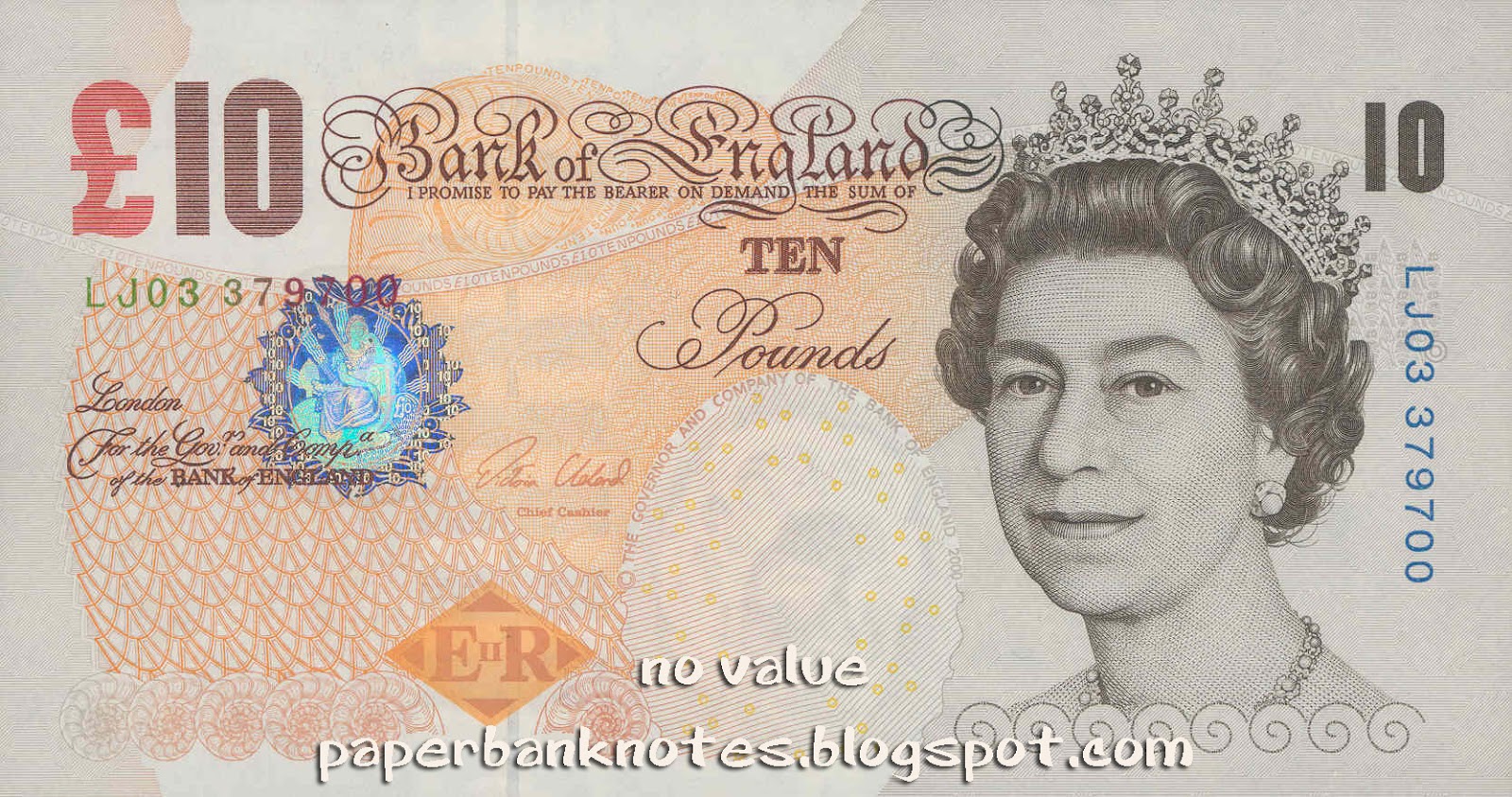
...Great Britain - £20 YR20 Millennium Commemorative 2000, s. Merlyn Lowther

Great Britain
(England, Scotland & Wales)

Bank of England
Currency - Pound Sterling (GBP)

This is my second last Millennium note that has been missing in my collection for more than 20 years. This is a £20 banknote issued by the Bank of England to celebrate the beginning of the new Millennium 2000. With the approval of The Bank of England, Debden Security Printing Limited released three notes to celebrate the new millennium and all were issued as numismatic products, some together with a coin. The issues came with two varieties. The premium sets which were presented in a box, whilst the standard sets came in a sealed cardboard folder. Unfortunately, I do not have the information about what the initial issued prices for these products were sold for but the quantity, it was 394 for this premium set (Set Serial nos YR20 000001 to YR20 000394). 
 
The Debden Security printing Limited was established in 1986, and started releasing collectible banknote sets together with coins to the public in 1990. However, Debden ceased providing such service in 2002 and during the period of 12 years, Debden had released banknotes together with coins, cupro-nickel, silver and gold with issuing prices ranging from £50 to £2,000 each. The banknotes were issued, apart from commemorative special, and included with the first and last prefix notes, which were not so popular to collectors. These sets were released in a presentation folders in cardboard, box or leatherette, which I believe to be used as gifts for special occasions or for Christmas. The series was released during the 12 years including this Millennium set of 3 notes individually (£5, £10 and £20), the Queen's birthday, the late Queen's Mother birthday, Queen's Jubilee, Prince Charles's birthday and so on. All notes issued were from the same circulating series at the time of release. However, the difference between these notes and those in circulation is the serial number. For example, for this note that I have posted here, this is for the new millennium and the prefix of this note is printed with YR20 (Year 2000). All three notes for the serial have the same prefix, and needless to say that these are limited editions for collectors. In terms of the quantity, I do not have all the details here, but I do know that, and just like those Australia NPA issues, they were not popular among collectors at that time as collectors felt that it was way overpriced and many of these stocks were later sold to dealers for distribution purposes. 

This is my second last note of my 2000 millennium collection. Only 19 countries around the world had released banknotes to celebrate the millennium year. Whilst most of them released them as normal circulation, few countries released them as a numismatic product, like the Bank of England. The lowest issue for this celebration was Fiji, where only 2000 pieces were printed for the $2000 note. In addition to this, it also issued a $2 banknote for the same celebration. Unlike the $2,000, the $2 notes were put into circulation.

The design of this £20 is the same as those in circulation in 2000, without any additional logo or any commemorative features added. The only indication to say that this is a commemorative is the serial number. All notes are printed with the prefix of YR20 (Year 2000). I believe this was released on or around the 15.12.1999.
 
Signature
Chief Cashier - Ms Merlyn Lowther (tenure 1999-2003 - first woman to hold this role)
Dimensions -  149mm x 80mm
 
Twenty Pounds
nd1999, Queen Elizabeth the Second

Sir Edward Elgar (b.1857-1934), Worcester Cathedral

Booklet front cover
 
View all year 2000 millennium banknotes issued
In all, there are only 42 notes issued


Appreciate it if you please let me know if you find any broken links. Some of the images here were scanned with 100 dpi only. These were done a long time ago, however I am not going to redo them again. All latest scans are all done with 300 dpi. All notes displayed here are all mine.


...Great Britain - £20 Polymer, s. Chief Cashier Sarah John

Great Britain
(England, Scotland & Wales)

Bank of England
Currency : Pound Sterling (GBP)

Posted here is the latest £20 note issued with the Chief Cashier's signature of Sarah John. Sarah John was appointed to the role on 01.06.2018. The £20 note is a new issue which was released to the public on 20.02.2020. This is the third of the polymer series since 2016 replacing the current paper banknotes in circulation.

In addition to the £20 note, a £10 note is also issued with the signature of Sarah John. This £10 note is a reprint from the 2017 first issue. I do not have this £10 note yet. There is no chance in design for the £10 polymer note except it's printed with a new signature.

As for the £20, and as expected, the main feature of the note on the front is the portrait of her majesty, Queen Elizabeth the Second together with the Bank of England building. On the larger transparent window, it's shows the Golden Margate lighthouse which was built in 1828 and Turner Contemporary (art gallery in Margate Kent, England) in blue. The design for the smaller window is based on Tintern Abbey in Monmouthshire.

On the back, it depicts an image of Joseph Mallord William Turner 1775-1851 with a backdrop of one of his famous paintings, the Fighting Temeraire. This oil painting was completed in 1838. The portrait William Turner printed on this note came from a self-portrait oil painting completed in around 1799. William Turner was a romantic painter, printmaker and watercolourist. He was born and lived in London all his life.

As mentioned earlier, the signature on the note belongs to Sarah John and this is the first time her signature appears on a banknote.

This £20 note is printed with the copyright©️ date of 2018.

Chief Cashier - Sarah John
Size - £20 (138mm x 73mm)
First Prefix - AA01

Ten pounds (do not have one yet)

Twenty Pounds
nd2020 (©️2018), portrait of Queen Elizabeth the Second (portrait dated 1985, aged 59)
Reverse - Joseph Mallord William Turner 1775-1851, the Fighting Temeraire painting

Footnote➥:
About 267 pieces of the £20 notes in 139 lots were auctioned off by Spink and Son Ltd in partnership with the Bank of England on 08.04.2020. All these notes are printed with the first prefix of AA01 and with low serial numbers, starting with AA01 000010 to the highest no AA01 002020. In addition to this, a full sheet of uncut 45 was also sold for £15,000. The auction raised a total of £149,960 plus a buyer commission of 20%. All net proceeds raised from the sale are donated to charities. Previous auctions on the £5 and £10, in 2016 and 2017, raised collectively in excess of £450,000 for charities.

Below are some of the results achieved:-
AA01 000010 - £7,500;
AA01 000011 - £2,800;
AA01 000020 - £3,200;
AA01 000028 - £1,400;
AA01 000088 - £3,000;
AA01 000100 - £1,800;
AA01 000999 & 001000 (2 notes) - £1,600
AA01 001794 - £270;
AA01 002016 - £270; and
AA01 002020 - £1,600.

The above prices exclude the hammer's commission of 20%. The lowest price realised for a single note was £270. Only 2 lots sold at that price. If you have bought one or more, congratulations to you.

Recently, it was reported that they are two varieties for the new £20 polymer note. The polymer materials were supplied by two companies, De La Rue and CCL (formerly Innovia). The purple ink surrounding the window is clear on notes with the De La Rue substrate, but slightly mottled in the CCL substrate. The polymer supply contract was split 75/25% between CCL and De La Rue, though all the notes were actually produced by De La Rue.

**

...Great Britain - £10 2016 (ND2017) Polymer Note Chief Cashier Ms Victoria Mary Florence Cleland

This is the second issue for the new Polymer series. This note was released to the public for circulation on 14.09.2017.

Ten Pounds
Dated 2016, AA01 First Prefix
Dated 2016 (ND2017), P395
Jane Austen 1775 - 1817 (novelist)
Reverse, AA01 First Prefix
Reverse

...Great Britain - £5 Isused on 13.09.2016 Chief Cashier Ms Victoria Mary Florence Cleland

2016 is the year where four banks issued £5 polymer banknotes in the United Kingdom. They are the Bank of England (13.09.2016), Clydesdale Bank (27.09.2016), Bank of Scotland (04.10.2016) and The Royal Bank of Scotland (27.10.2016). Whilst both the Bank of Scotland and Clydesdale Bank have previously issued polymer notes, this is the first time that the Bank of England has issued a polymer note in their current banknotes series. The Bank of England also intends to release two more polymer notes (£10 and £20) over the next few years. However, it is not sure if the £50 will also be converted into polymer material too. This note bears the signature of the Chief Cashier Victoria Mary Florence Cleland. She was appointed to the current role in March 2014. First prefix of this issue is AA01 with AM as the last letter prefix. It is not clear if AM60 is the last prefix yet, or the number could be higher. This note is printed with a year date of 2015.

Designs:
Front - Queen Elizabeth the Second, Coronation Crown, see-through window with Elizabeth Tower (Big Ben), Britannia;
Back - Sir Winston Churchill 1874-1965, Palace of Westminster and Elizabeth Tower (Big Ben), 1993 Nobel Prize in Literature award medal, Blenheim Palace maze (Blenheim Palace - birthplace and ancestral home of Sir Winston Churchill);

440 million pieces printed.

Five Pounds
Dated 2015 (Issued 13.09.2016), PNL
Reverse
According to a report, 440m printed with prefix AA to AM, with 60m of each prefix printed. Based on this information given, I am unable to work these out unless I know all the prefixes printed i.e. AA01, AA02 etc.

...Great Britain - 2015 Victoria Mary Florence Cleland

Ten Pounds
ND2015
Reverse
Twenty Pounds
ND2015
Reverse
Fifty Pounds
ND2015
Reverse
A full set of 2015 notes all bearing the signature of Victoria Mary Florence Cleland, the Chief Cashier for the Bank of England. Victoria Cleland was appointed to her role in March 2014. These notes were reportedly released on 3.3.2015. Here I have uploaded a full set except the £5 note. The bank has not printed the £5 note with Victoria Cleland's signature as the bank is expecting to release the new Polymer £5 in late 2016 which we expect to see her signature on the note too. It is interesting to note that banknotes issued by the Bank of England are meant for circulation in England and Wales only, under the Bank of England Act 1694. However, given that the Pound Sterling is also the official currency of Scotland, Northern Ireland, Isle of man, Guernsey, Jersey, Gibraltar, Saint Helena and three other British territories and they are also at par value, the English Pound Sterling notes are also negotiable in these territories. However the situation may not be vice versa if foreign Pounds Sterling are presented in England and Wales for commercial transaction purposes, as I have seen The Royal Bank of Scotland banknotes rejected by traders many years ago. I am not sure if this has changed since then as this is entirely up to the individual to accept or reject foreign Pound Sterling notes if presented. The BoE will accept them at face value and I believe commercial banks in England and Wales will accept them too. Please correct me if I am wrong on this.  

...Great Britain - Five Pounds 1998 Prince of Wales 50th Birthday Commemorative

Five Pounds
ND1998, PNL
Reverse
Front Cover
 
This is a numismatic joint ventured commemorative issue, released by the Bank of England and the Royal Mint with a five pounds note and a five pounds crown coin. This commemorative issue was released in 1998 to celebrate the 50th Birthday of the Prince of Wales Prince Charles with the banknotes printed with a special cypher of PW50 for this special occasion. The design of the banknote was the same as those circulating £5 notes (P382b) at that time except that it has a special cypher of PW50. This cypher PW50 will not be produced for general circulation. The coin issued together with this note is a five pound crown in UNC/BU condition. A total of 1000 sets were issued for this commemorative. These kinds of numismatic releases were very similar to those issued by Note Printing Australia back in the 90s too. 

Great Britain - Five Pounds 1997 Queen Elizabeth 50th Golden Jubilee Commemorative

Five Pounds
ND1997, PNL
Reverse
Front Cover
This is a numismatic commemorative issue, released by the Bank of England and the Royal Mint with a five pounds note and a five pounds coin. This commemorative issue was released in 1997 to celebrate the Queen and the Prince Philip the Duke of Edinburgh's 50th Wedding Anniversary. The five pounds note is printed with a special cypher of HM50 in honour of this special occasion and will not be produced for general circulation. The design of the banknote was the same as those circulating notes at that time except that it has a special cypher HM50. The coin issued together with this note is a five pounds crown are in UNC/BU condition. This coin is the fourth in a sequence of commemorative five-pound coins. A total sets of 5000 were issued for this special occasion.

Great Britain - Five Pounds Queen Elizabeth 70 Birthday Commemorative

Five Pounds - HM70
ND1996, PNL
Reverse
Folder Front Cover
This is a numismatic commemorative issue, released by the Bank of England and the Royal Mint with a five pounds note and a five pounds coin. This commemorative issue was released in 1996 to celebrate the Queen's 70th birthday and as such a special cypher of HM70 was used for the serial number on the note. The design of the banknote was the same as those circulating notes at that time except that it has a special cypher of HM70. This HM70 prefix will not be produced for general circulation. The coin issued together with this note is a five pound crown is in BU condition. This coin is the third in a sequence of commemorative five-pound coins and is also the first United Kingdom coin issued to celebrate the birthday of a reigning monarch. A total sets of 5000 were issued for this special occasion.

Great Britain - Five Pounds 2002 Queen Golden Jubilee 1952-2002

Five Pounds
ND2002, PNL
Reverse
Front Cover
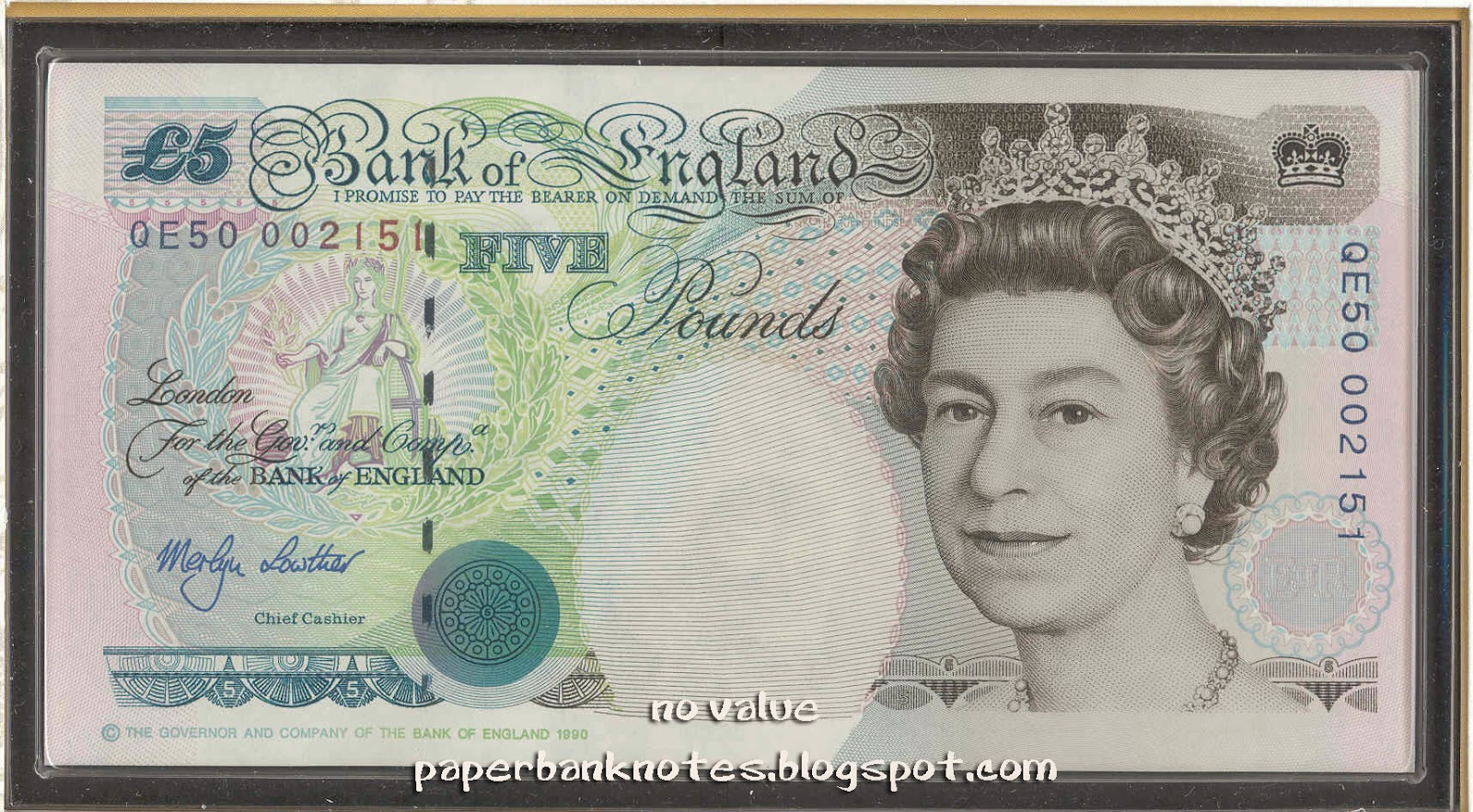
Great Britain - 2002 Queen Golden Jubilee Commemorative Cover. This is a numismatic product issued to celebrate the Queen's Golden Jubilee 1952-2002. The cover comprises of two stamps, a £5 Crown coin and a £5 banknote signed by the Chief Cashier Merlyn Lowther. both the coin and banknotes are legal tender. The note used for this commemorative issue is the same design as those normal £5 note but with a special and unique prefix of QE50. This is the only prefix used for this commemorative issue and was not used for those in normal circulation. A total sets of 1,500 were printed. With such a large population in the UK, this is by any definition is a very small issue.

...Great Britain - Five Pounds 2000 Queen Mother Queen Elizabeth 100 Years Old

Great Britain £5 Commemorative note. This note was issued in an envelope folder together with a £5 coin and a £5 postage stamp. This was a joint issue with the Bank of England, the Royal Mint and the Royal Mail to celebrate the late Queen Mother Queen Elizabeth 100th birthday. The Queen Mother was born on 4.8.2000 and passed away on 30.3.2002, aged 101. Like all previously numismatic issues, this £5 note is the same as the normal Merlyn Lowther £5 note issued but with a special prefix of QM10. Only 10,000 sets were issued of which 1,000 were issued with a postage stamp of £5. 


Five Pounds

ND2000
Reverse
Front Cover

...Great Britain - 5 Pounds 2000 Millennium Note YR20 Commemorative

Five Pounds
ND1999, PCS10
Reverse
 
Great Britain - Five Pounds Millennium note. Like many countries around the world (a total of 16 nations including Great Britain), this five pounds note was printed to celebrate the new millennium. The Bank of England released more than 3 notes to commemorate the new Millennium. Apart from this note, it also released the £10 and £20 notes in a presentation folder separately. This note used for this special occasion was the same as those notes issued for general circulation but with the special prefix of YR20 00. This note bears the facsimile signature of the Chief Cashier, Merlyn Lowther. A total of 1,500 pieces were printed for this denomination.

View all year 2000 millennium banknotes issued


Appreciate it if you please let me know if you find any broken links. Some of the images here were scanned with 100 dpi. These were done a long time ago, however I am not going to redo them again. Those latest scans are all done with 300 dpi.

...England - 1988 Issues, s. G Malcolm Gill (1988-1991)

1988 to 1991 Issues (all Circulated)
All signed by G. Malcolm Gill (1988-1991)
Ten Pounds
ND1988 P379e
Reverse
Twenty Pounds
ND1988, P380e
Reverse
 
These two notes bear the signature of G. Malcolm Gill (1988-1991) as Chief Cashier. Nothing special about these 2 notes that I have uploaded here. Both notes are in circulated condition. Like those that I posted back in January this year, these two notes were also given to me as a gift by the same person. In addition to these two notes, G. Malcolm Gill's signature also appeared on the two other denominations, the £5 and £50 notes, unfortunately I do not have these notes in my collection (yet).